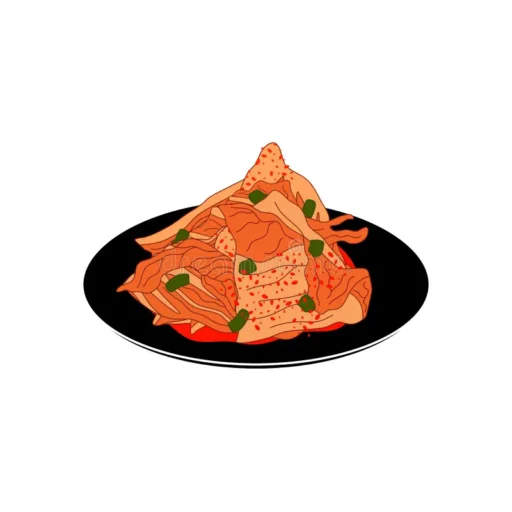
Use this as a starting point for understanding common Korean foods, from stews and noodles to street snacks and desserts.
What exactly are you ordering?
Bibimbap
비빔밥Pronounced: bi-bim-bap
Rice topped with vegetables and other ingredients, mixed together before eating.
Read the full explainerBingsu
빙수Pronounced: bing-su
A shaved-ice dessert topped with ingredients such as fruit, red bean, condensed milk or rice cake.
Read the full explainerBossam
보쌈Pronounced: bo-ssam
Boiled or steamed pork served in slices, usually wrapped with greens and eaten with kimchi and condiments.
Read the full explainerBungeoppang
붕어빵Pronounced: bung-eo-ppang
A fish-shaped pastry traditionally filled with sweet red-bean paste, despite containing no fish in the classic version.
Read the full explainerDakgalbi
닭갈비Pronounced: dak-gal-bi
Spicy stir-fried chicken commonly cooked with cabbage, rice cakes and sweet potato.
Read the full explainerDoenjang Jjigae
된장찌개Pronounced: doen-jang jji-gae
A soybean-paste stew with a salty, earthy flavour.
Read the full explainerGalbitang
갈비탕Pronounced: gal-bi-tang
A clear soup made around beef short ribs, usually served as a substantial meal.
Read the full explainerGimbap
김밥Pronounced: gim-bap
Rice and fillings rolled in dried seaweed and sliced into bite-size pieces.
Read the full explainerHotteok
호떡Pronounced: ho-tteok
A filled pancake commonly sold as a warm street snack, often with brown sugar, seeds or nuts.
Read the full explainerJajangmyeon
짜장면Pronounced: jja-jang-myeon
Noodles topped with a thick black-bean sauce, commonly eaten as Korean-Chinese comfort food.
Read the full explainerJapchae
잡채Pronounced: jap-chae
Stir-fried glass noodles with vegetables and a soy-based seasoning.
Read the full explainerKimchi Jjigae
김치찌개Pronounced: gim-chi jji-gae
A robust stew built around well-fermented kimchi, often with tofu and meat.
Read the full explainerMandu
만두Pronounced: man-du
Korean dumplings that may be steamed, boiled, pan-fried or added to soup.
Read the full explainerPronounced: naeng-myeon
Cold buckwheat-style noodles served either in chilled broth or with a spicy mixed sauce.
Read the full explainerSamgyeopsal
삼겹살Pronounced: sam-gyeop-sal
Thick slices of pork belly grilled at the table and commonly wrapped with greens and condiments.
Read the full explainerPronounced: seol-leong-tang
A pale beef-bone soup typically seasoned at the table and served with rice.
Read the full explainerSundubu Jjigae
순두부찌개Pronounced: sun-du-bu jji-gae
A spicy stew centred on very soft tofu.
Read the full explainerTteokbokki
떡볶이Pronounced: tteok-bok-kki
Chewy rice cakes commonly served in a spicy-sweet red sauce.
Read the full explainerNo matching entries yet.
How to use the food guide
Each entry explains the basic form of a dish, typical flavour and the sort of ingredient or dietary detail that may matter when ordering. Recipes vary by restaurant and region, so these are orientation notes rather than guarantees about a particular bowl or plate.
Dietary notes need checking
A vegetable-heavy dish is not automatically vegetarian. Broths, sauces and seasoning can contain meat or seafood even when those ingredients are not obvious, so anyone with dietary restrictions should confirm with the restaurant directly.