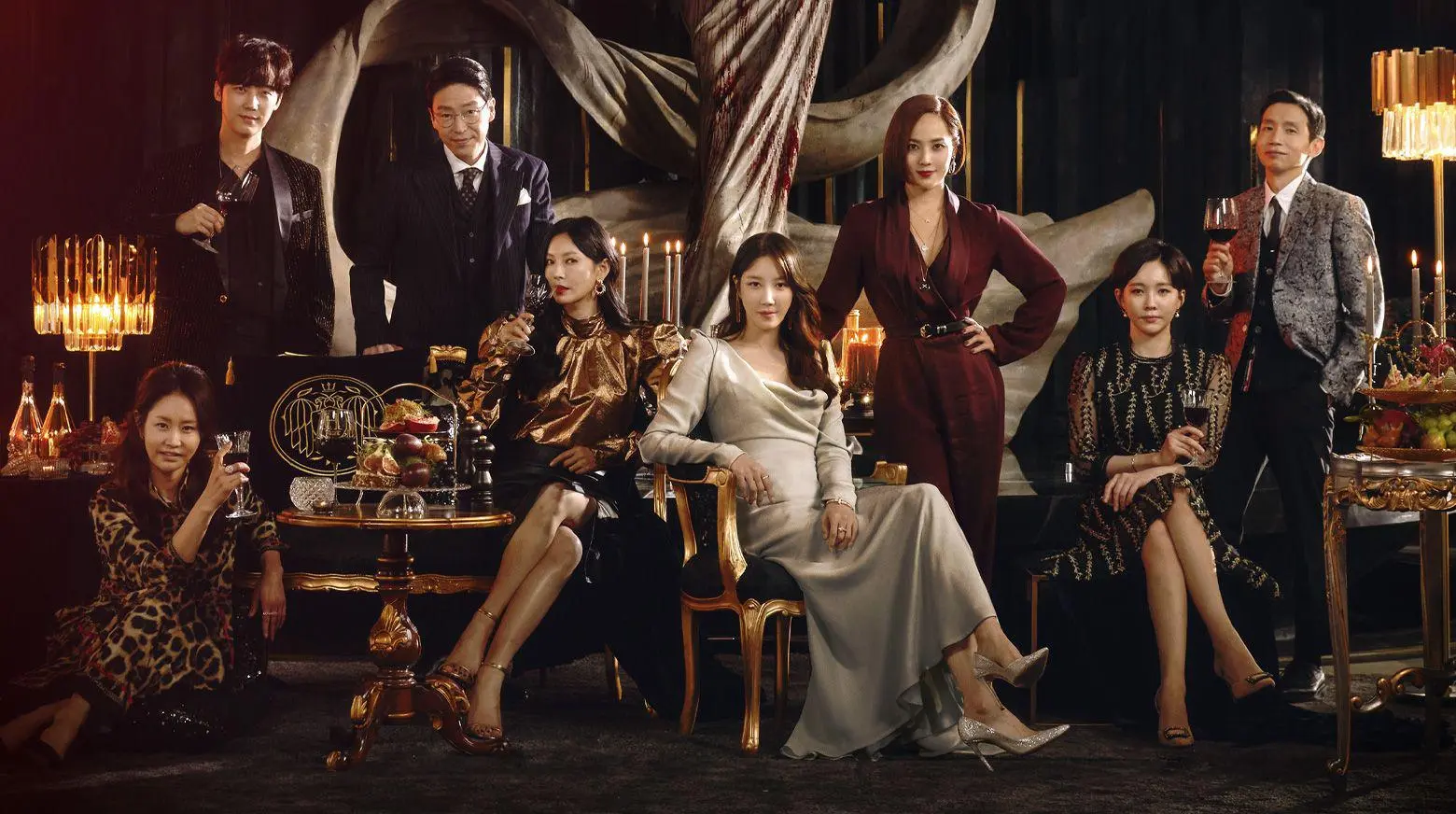
There are K-dramas that ease you in gently, and then there are K-dramas that grab you by the collar and refuse to let go. The Penthouse: War in Life belongs firmly in the latter category. From its opening moments to its relentless final stretch, it is a drama that does not believe in moderation. Everything is heightened: the emotions, the stakes, the betrayals, the cruelty, and the desperation.
Set within the towering luxury apartment complex Hera Palace, The Penthouse is not merely a story about wealth. It is a story about obsession — with status, with success, with revenge — and the moral erosion that occurs when people decide that winning matters more than being human.
Watching The Penthouse feels less like passive entertainment and more like being pulled into a storm. It is overwhelming, often frustrating, occasionally absurd, but undeniably gripping. Love it or hate it, this drama leaves an impression — and that is its greatest strength.
First Impressions: Beauty With Teeth
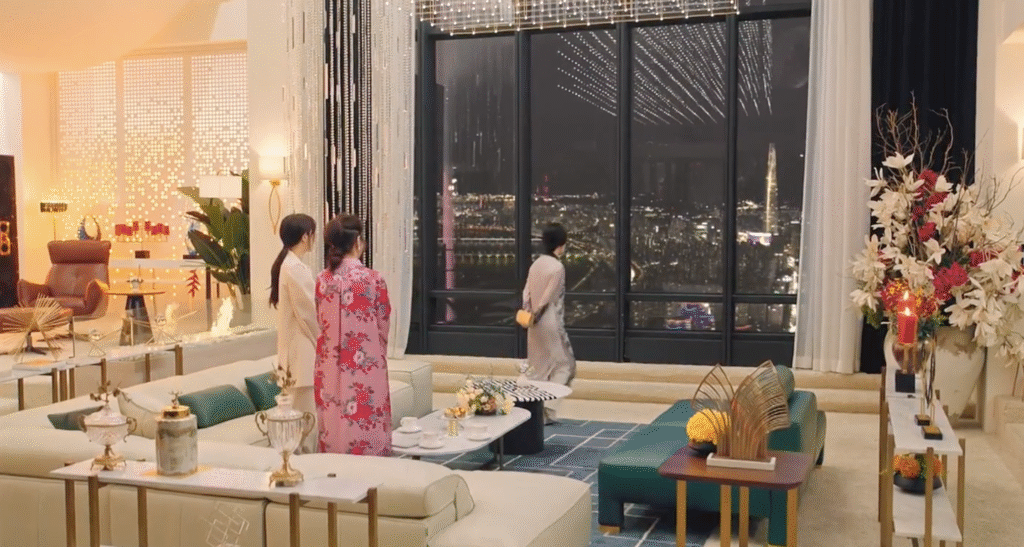
At first glance, The Penthouse dazzles. The sets are immaculate, the wardrobes extravagant, and the cinematography polished to near excess. Hera Palace itself feels almost unreal — a vertical city of privilege where money silences guilt and power rewrites truth.
But beneath the glamour is a simmering unease. From the first episode, something feels wrong. Smiles are brittle, friendships transactional, and every conversation carries the sense that someone is keeping score. The drama makes it clear early on that this is not a place where kindness survives long.
The opening mystery involving a child’s death immediately establishes the tone. This is not a drama interested in subtlety. It tells you upfront that innocence will be sacrificed, secrets will rot, and consequences will be brutal.
Characters: Monsters Made, Not Born
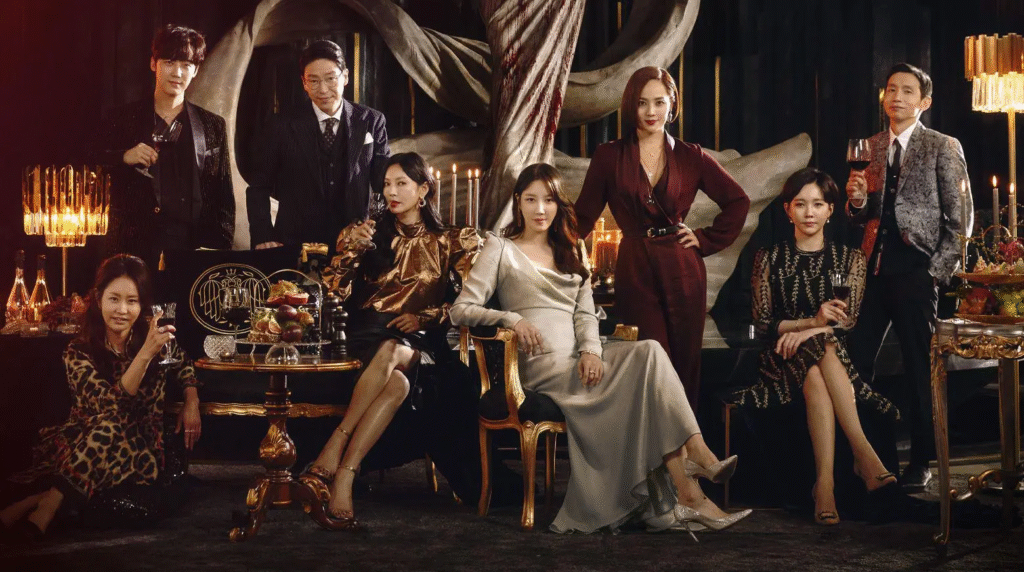
One of The Penthouse’s most compelling qualities is its refusal to present clean heroes or simple villains. Almost every character is deeply flawed, shaped by fear, envy, and unhealed trauma.
Shim Su-ryeon: Grace Under Ruin
Shim Su-ryeon begins as the most composed figure in Hera Palace — elegant, reserved, seemingly untouchable. Yet as the layers peel away, we see that her grace is armor, forged through neglect, betrayal, and quiet suffering.
Her journey is one of awakening. She moves from passive endurance to deliberate confrontation, learning that dignity alone is not enough to survive among predators. Her arc is slow but emotionally resonant, driven not by rage alone but by the painful realization that silence enables cruelty.
Cheon Seo-jin: Ambition Without Mercy
If The Penthouse has a gravitational center, it is Cheon Seo-jin. Loud, volatile, and fiercely intelligent, she embodies unchecked ambition. Her love is possessive, her pride fragile, and her fear of falling from the top all-consuming.
What makes her fascinating is that she is not driven by greed alone, but by terror — the terror of being irrelevant, of losing control, of seeing her child fail where she once succeeded. She does not just want victory; she needs it to justify her existence.
Her unraveling is both horrifying and mesmerizing, a study in how obsession corrodes empathy until nothing remains but instinct.
Oh Yoon-hee: The Tragedy of Wanting More
Oh Yoon-hee represents a different form of ambition — one born from scarcity rather than excess. Her hunger for validation, security, and opportunity feels understandable, even relatable. Yet as the story progresses, her desperation leads her down increasingly destructive paths.
Her tragedy lies in her constant proximity to what she wants without ever fully possessing it. Every step forward is followed by moral compromise, until she becomes someone she barely recognizes. She is not evil, but she is not innocent either — and that ambiguity defines much of the drama’s emotional weight.
The Children: Inheritors of Violence
Perhaps the most devastating aspect of The Penthouse is its portrayal of children raised within systems of cruelty. These teenagers are not merely victims; they are shaped, sharpened, and weaponized by their parents’ ambitions.
Bullying, academic pressure, emotional neglect, and conditional love become normalized. The drama makes it painfully clear that generational damage is not accidental — it is taught.
Themes: What Happens When Success Becomes God
At its core, The Penthouse is a critique of success worship. The drama asks uncomfortable questions:
What is achievement worth if it requires destroying others?
What kind of society rewards cruelty as efficiency?
What happens when children become proof of parental worth rather than people?
Education, particularly elite education, becomes a battlefield where morality is sacrificed for advantage. Talent is less important than connections, wealth, and manipulation. Rules exist only for those without power.
The drama does not suggest that wealth itself is evil, but it does argue that systems without accountability breed monstrosity. Hera Palace is a place where crimes are not hidden — they are absorbed, justified, and erased.
Storytelling Style: Excess as Intentional Design

The Penthouse is often described as over-the-top — and it is. But that excess is not accidental. This is a drama that leans fully into melodrama, using exaggeration to expose emotional truths rather than realism.
Plot twists arrive at dizzying speed. Deaths are reversed, identities blurred, alliances shattered and reforged. Logic is sometimes sacrificed for shock. Yet despite this, the emotional throughlines remain consistent: betrayal hurts, power corrupts, and revenge consumes.
This style will not appeal to everyone. Viewers seeking subtle pacing or grounded realism may find it exhausting. But for those willing to embrace heightened storytelling, the chaos becomes part of the experience.
Pacing: Relentless and Unforgiving
The pacing of The Penthouse is aggressive. Episodes rarely allow space to breathe, stacking conflicts on top of one another until tension becomes almost unbearable.
While this makes the drama addictive, it can also feel overwhelming. Emotional moments are sometimes rushed, and character development occasionally struggles to keep pace with the plot. Yet the urgency mirrors the characters’ mental states — trapped, panicked, and constantly reacting.
The drama wants you to feel breathless, and it succeeds.
Visual Language: Wealth as a Cage
Visually, The Penthouse is stunning. Gold accents, marble floors, towering windows — everything signals power and exclusivity. But the beauty is cold. The spaces feel sterile, more like museums than homes.
As the story progresses, this opulence begins to feel suffocating. The same walls that signify success also trap the characters, amplifying paranoia and isolation. Wealth becomes less a reward and more a prison.
Moral Ambiguity: No Clean Escapes
One of the boldest choices The Penthouse makes is its refusal to offer moral comfort. Redemption is rare and often incomplete. Justice, when it comes, feels delayed and imperfect.
Some characters suffer consequences that feel disproportionate; others evade accountability longer than expected. This imbalance is frustrating — and intentional. The drama reflects a world where power distorts fairness and closure is not guaranteed.
This lack of neat resolution may unsettle viewers, but it reinforces the central thesis: systems built on exploitation do not produce tidy endings.
Why It Works Despite Its Flaws
The Penthouse is messy. It stretches plausibility. It occasionally indulges in shock for shock’s sake. Yet it works because it commits fully to its vision.
The performances are fearless. The characters are unforgettable. The emotional stakes are constantly raised. Most importantly, the drama never pretends to be gentle. It is honest about its ugliness, about the violence of ambition, and about the cost of unchecked desire.
It does not ask you to admire its characters — it asks you to witness them.
Final Verdict: A Brutal, Addictive Mirror

If The Penthouse can be summed up in one sentence, it is this:
A drama that exposes the rot beneath privilege by refusing to look away.
It is not comforting. It is not subtle. But it is compelling in a way few dramas dare to be. It forces viewers to confront uncomfortable truths about success, parenting, morality, and power — all wrapped in glossy excess and relentless storytelling.
Is it perfect? No.
Is it exhausting? Absolutely.
Is it unforgettable? Without question.
The Penthouse is not a drama you casually enjoy. It is one you survive — and long after the final episode, the echoes of its chaos linger, asking whether the cost of winning was ever worth it at all.
Leave a Reply