Best Neighbourhoods to Stay in Seoul for First-Time Visitors
Seoul can feel overwhelming the first time you visit. The city stretches endlessly in every direction, stitched together by subway lines, neon-lit streets, quiet residential alleys, glass skyscrapers, mountain trails, ancient palaces, and cafés tucked inside restored hanoks. One neighbourhood can feel impossibly modern while another, just twenty minutes away, feels almost suspended in time.
That’s part of Seoul’s charm. It’s not a city with one obvious center. Instead, it’s a collection of distinct districts, each with its own rhythm, personality, and crowd. Where you stay shapes your trip far more than many first-time visitors expect. Stay in the wrong area and you may spend half your holiday commuting. Stay in the right one and the city suddenly feels intuitive, walkable, even strangely comforting.
The good news is that Seoul is incredibly well-connected, and there isn’t really a “bad” neighbourhood for tourists. But certain areas suit certain travel styles better than others. Some are ideal for shopping and late-night food runs. Others are quieter, more scenic, or better for families. A few make the perfect base if you want Seoul to feel cinematic in that K-drama kind of way.
Here are the best neighbourhoods to stay in Seoul for first-time visitors, and what each area actually feels like once you’re there.
Myeongdong: The Easiest Choice for Most First-Time Visitors
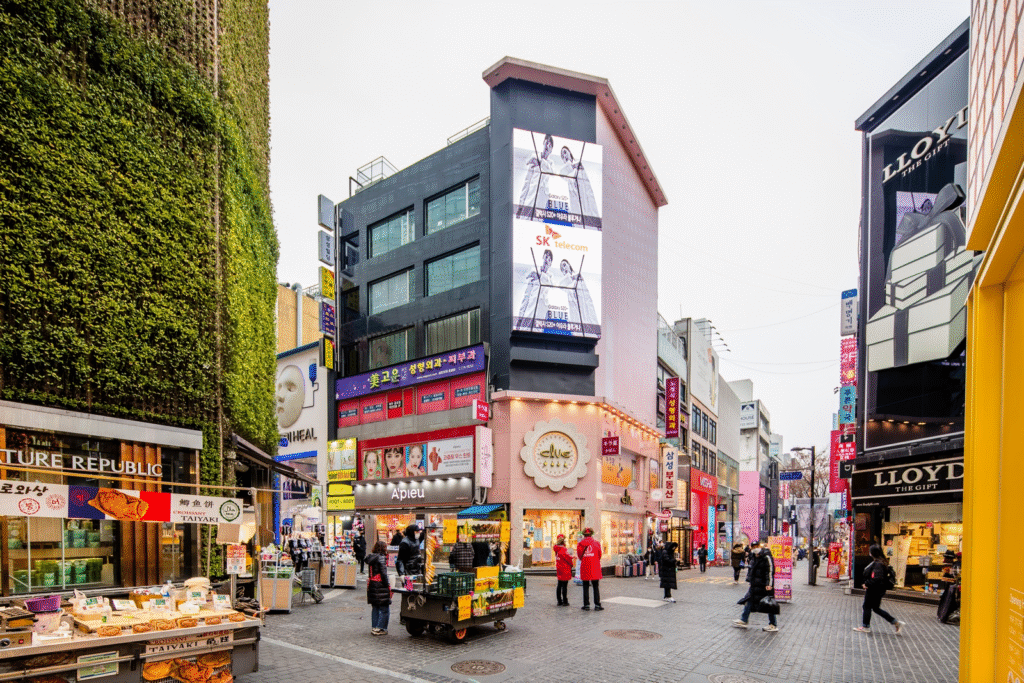
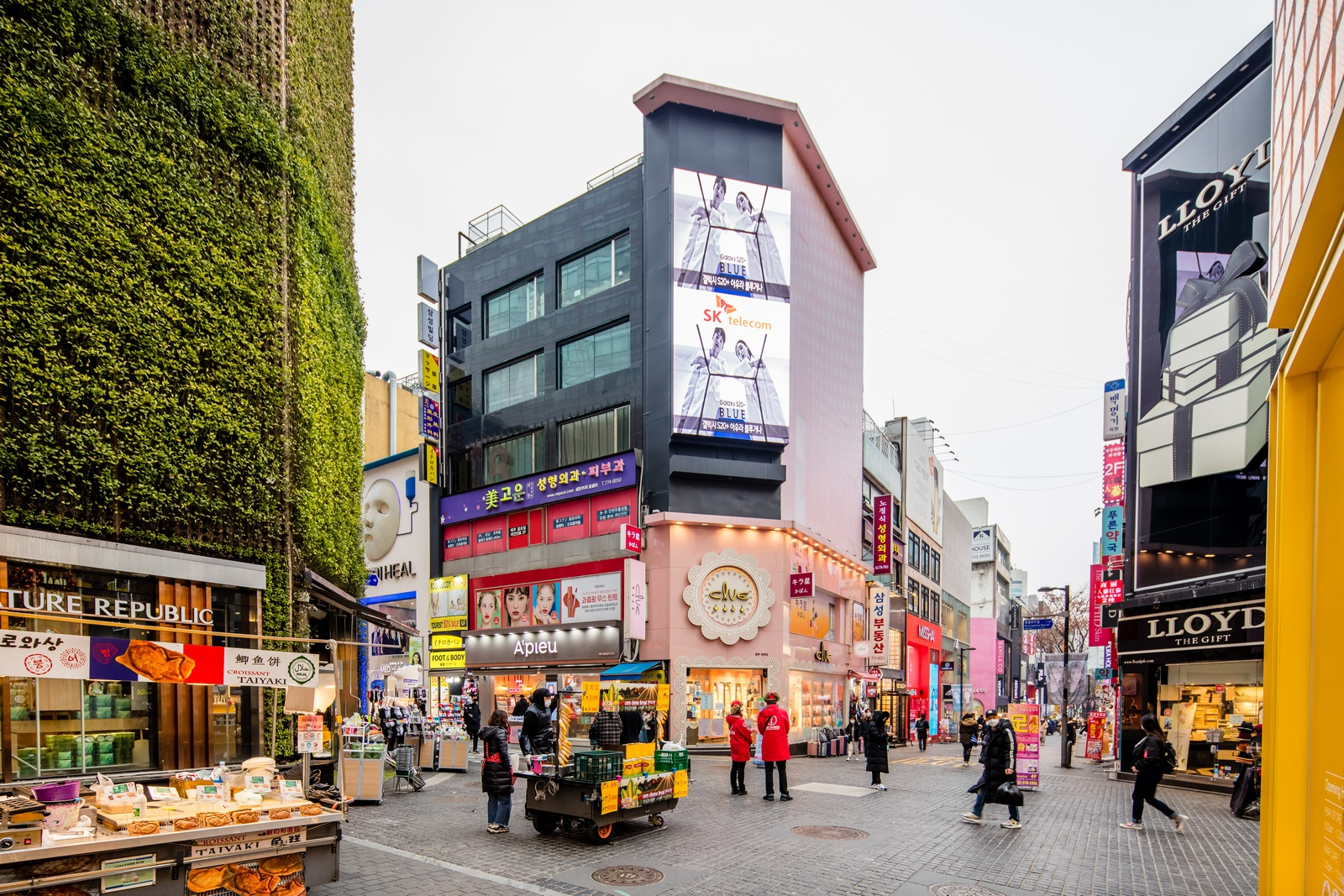
There’s a reason Myeongdong keeps appearing on every Seoul itinerary. It may not be the trendiest district anymore, but for first-time visitors, it remains one of the most practical and comfortable places to stay.
Myeongdong sits in a highly convenient part of central Seoul, with excellent subway access and easy airport limousine bus connections. If you’re arriving in Korea tired, jet-lagged, slightly intimidated by the language barrier, and just want things to feel easy for a few days, Myeongdong works beautifully.
The streets are packed with skincare stores, casual eateries, money changers, convenience stores, pharmacies, and street food stalls selling grilled lobster, tteokbokki, egg bread, and hotteok late into the night. It’s touristy, yes, but not unpleasantly so. The area is designed for wandering. You can leave your hotel at 10 p.m. looking for snacks and still find the streets lively.
What makes Myeongdong particularly appealing is how central it feels. You’re close to Seoul Station, Namsan Tower, Euljiro, Insadong, and major subway interchanges. For a first trip where you’ll likely bounce between famous attractions, that convenience matters more than people admit.
The downside is that parts of Myeongdong can feel commercial and crowded, especially in the evenings. If you’re searching for Seoul’s indie café culture or quieter local atmosphere, you may outgrow the area quickly. But for many travelers, especially those visiting Korea for the first time, it’s hard to deny how stress-free Myeongdong makes everything.
Hongdae: Best for Youthful Energy, Nightlife, and Café Culture
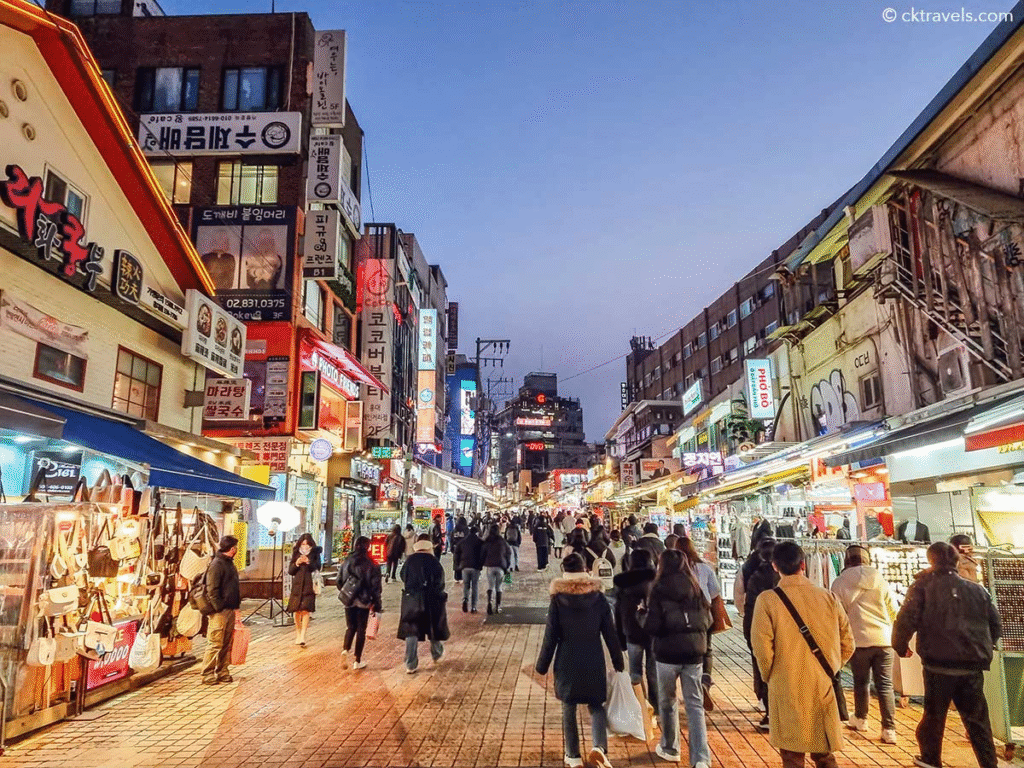
Hongdae feels like a completely different city from Myeongdong. Younger, louder, trendier, messier in an entertaining way.
Centered around Hongik University, this neighborhood has long been associated with indie culture, busking performances, nightlife, and student creativity. These days, it’s one of Seoul’s most internationally popular areas, especially among younger travelers.
The appeal is immediate. Walk around Hongdae at night and you’ll see dance crews performing in public squares, students spilling out of cafés at midnight, photobooth shops glowing on every corner, and entire streets devoted to fashion, karaoke, and late-night food.
It’s also one of the best neighborhoods for café hopping. Seoul’s café culture is famous for a reason, and Hongdae delivers some of the city’s most playful and visually creative spaces. Animal cafés, minimalist bakeries, retro record cafés, giant dessert spots — it’s all here.
For first-time visitors, Hongdae works particularly well if you enjoy staying somewhere lively and walkable. You can easily spend entire evenings without needing public transport. The area is also connected directly to Incheon Airport via the AREX line, which makes arrival and departure surprisingly convenient.
That said, Hongdae can become noisy, especially on weekends. Some streets stay active until very late at night. If you’re a light sleeper or prefer calmer surroundings, you may want to stay slightly outside the busiest core area near Yeonnam-dong or Hapjeong instead.
Insadong: Traditional Seoul Without Feeling Inconvenient
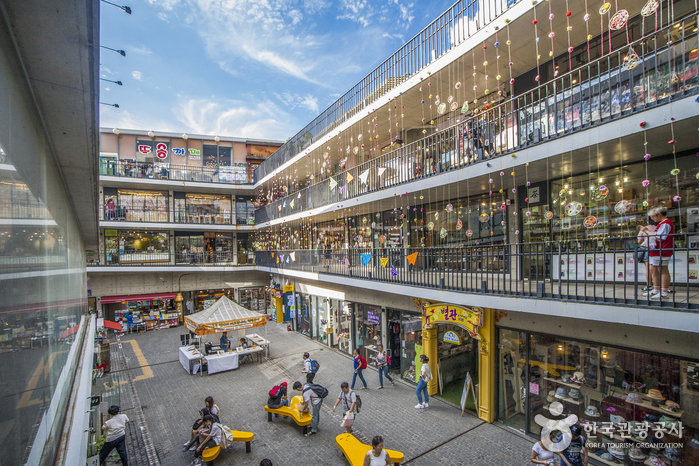
Some visitors come to Seoul wanting sleek skyscrapers and futuristic shopping malls. Others want hanok houses, tea shops, palace walls, and quiet alleys lined with crafts. If that sounds more like your pace, Insadong is one of the best places you can stay.
Insadong feels deeply tied to Seoul’s older identity. Traditional tea houses sit beside calligraphy shops and ceramics stores. During autumn or winter, the area becomes especially atmospheric, particularly at night when the crowds thin out and the lanterns begin to glow.
What makes Insadong appealing for first-timers is that it balances tradition with convenience. You’re close to Gyeongbokgung Palace, Bukchon Hanok Village, Ikseon-dong, and Jogyesa Temple, but still connected to modern subway lines. You can spend the morning wandering through palace grounds and the evening at a contemporary café in nearby Anguk.
The pace here is slower than Myeongdong or Hongdae. Nights are quieter. Restaurants tend to focus more on traditional Korean cuisine than trendy fusion spots. It suits travelers who enjoy walking, photography, history, and slower travel experiences.
If you’ve ever imagined Seoul through the lens of historical dramas and cozy hanok cafés, Insadong captures that feeling surprisingly well.
Gangnam: Modern Seoul at Full Speed
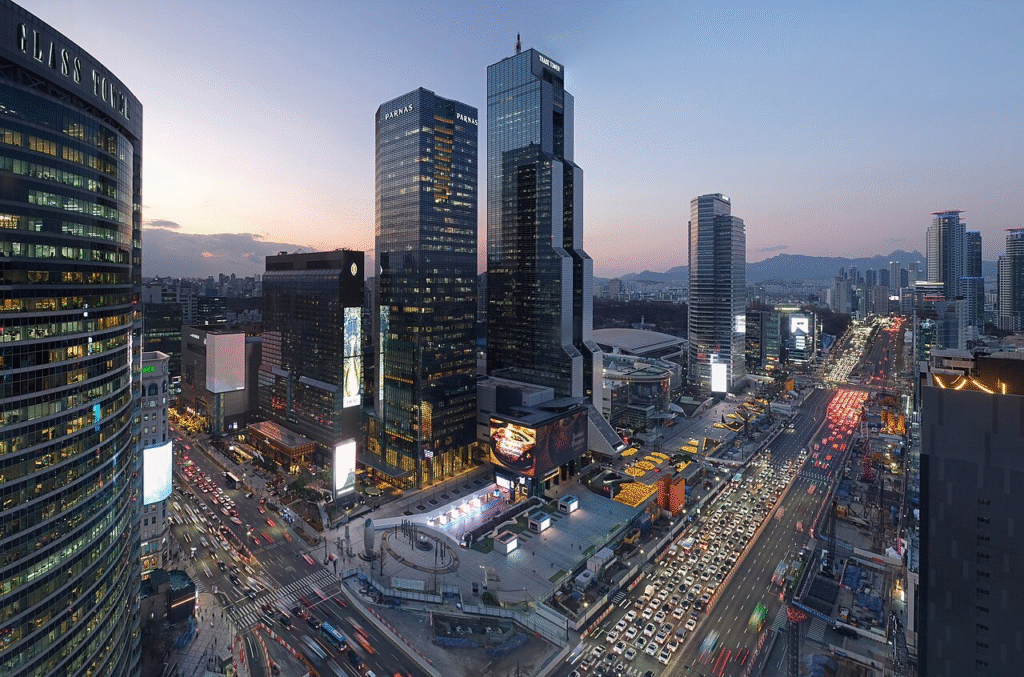
Gangnam is often the version of Seoul people recognize before they even visit Korea. Towering office buildings, luxury boutiques, glossy cafés, designer stores, plastic surgery clinics, expensive cars, and immaculate department stores — this is Seoul at its most polished and aspirational.
Staying in Gangnam feels different from staying north of the Han River. The roads are wider. The pace feels more corporate. The architecture becomes sleeker and more vertical. Even the cafés somehow feel more expensive.
For first-time visitors, Gangnam works best if you’re interested in modern Korean culture: K-beauty clinics, luxury shopping, upscale dining, nightlife, and polished city aesthetics. COEX Mall, COEX Aquarium, Starfield Library, and high-end shopping streets are all located here.
Gangnam hotels also tend to feel newer and more spacious compared to some older hotels in central Seoul.
The tradeoff is location. Many of Seoul’s traditional attractions sit north of the river, meaning you’ll spend more time commuting if your itinerary revolves around palaces, historic districts, and older neighborhoods.
Still, for travelers who want Seoul’s sleek contemporary side — the version often shown in K-dramas featuring chaebols and startup CEOs — Gangnam absolutely delivers.
Seongsu: Seoul’s Coolest Neighborhood Right Now
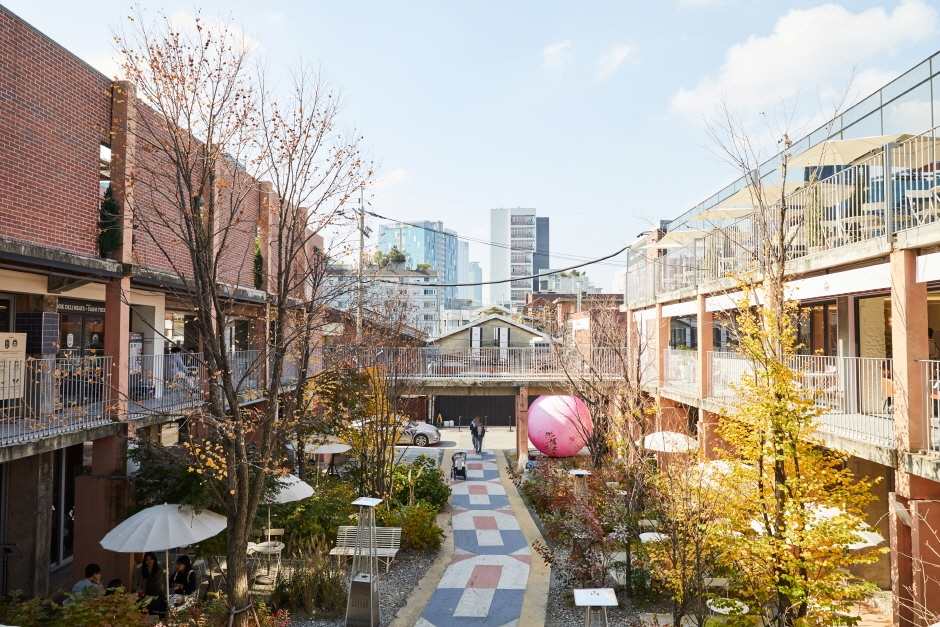
Seongsu is what happens when old factories become design studios, cafés, and fashion spaces. It’s often called the “Brooklyn of Seoul,” though honestly, that comparison feels a little lazy now. Seongsu has evolved into something distinctly Korean.
The area still carries traces of its industrial past. You’ll notice it in the exposed brick buildings, converted warehouses, and narrow streets where old shoe workshops sit beside minimalist cafés and pop-up fashion stores.
For travelers interested in Korean fashion, design, cafés, and trend culture, Seongsu is probably the most exciting neighborhood in Seoul right now. Brands frequently hold temporary exhibitions and pop-ups here, which means the streets are constantly changing.
Unlike Myeongdong or Hongdae, Seongsu feels more curated and less chaotic. It attracts a slightly older crowd — creative professionals, fashion enthusiasts, couples, and locals looking for slower weekends.
The downside is that it’s less traditionally tourist-friendly. Attractions are more spread out, and the neighborhood’s appeal comes more from wandering than checking famous sights off a list.
But if your ideal Seoul trip involves stylish cafés, independent boutiques, and long afternoons exploring aesthetic streets, Seongsu may end up being your favorite part of the city.
Itaewon: International, Diverse, and Constantly Changing
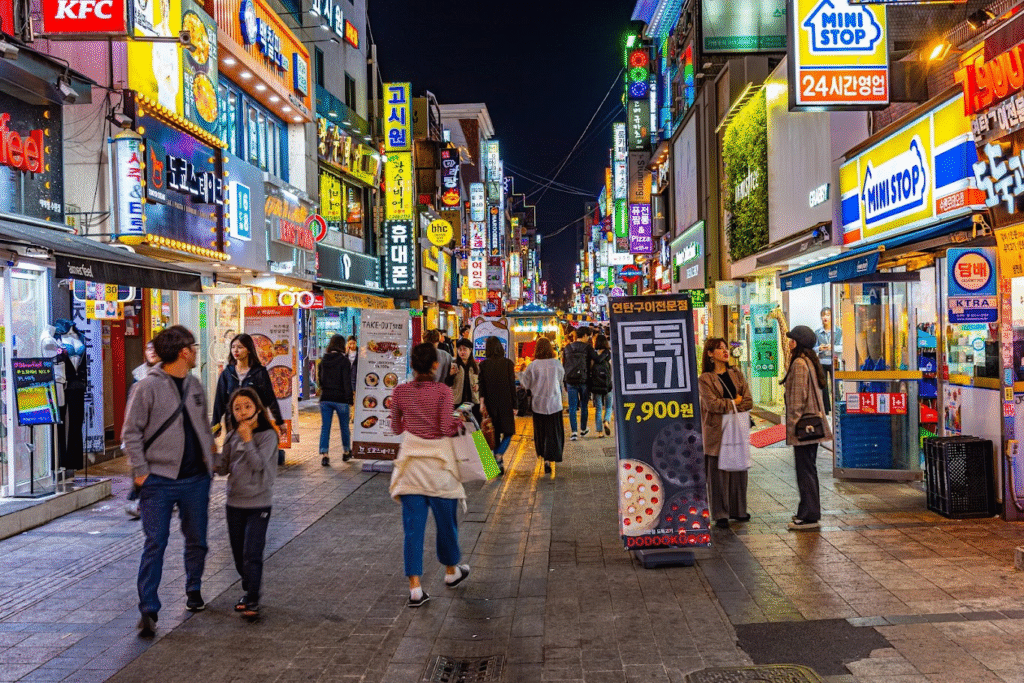
Itaewon has changed dramatically over the years, but it remains one of Seoul’s most internationally diverse neighborhoods.
Historically known for its expat community and nightlife, Itaewon offers a different side of Seoul — one where global influences blend together more visibly. You’ll find halal restaurants, international brunch cafés, rooftop bars, vintage shops, and multicultural food scenes that are harder to find elsewhere in the city.
For some first-time visitors, Itaewon provides a softer landing into Seoul because English is more widely spoken and the atmosphere feels more internationally familiar.
Nearby Hannam-dong has also transformed the broader area into one of Seoul’s most stylish districts, filled with luxury cafés, art galleries, and high-end concept stores.
Itaewon works well for travelers who prioritize nightlife, international food, and social energy. But it may feel less “traditionally Korean” than neighborhoods like Insadong or Euljiro.
Jamsil: Best for Families and Slower Travel
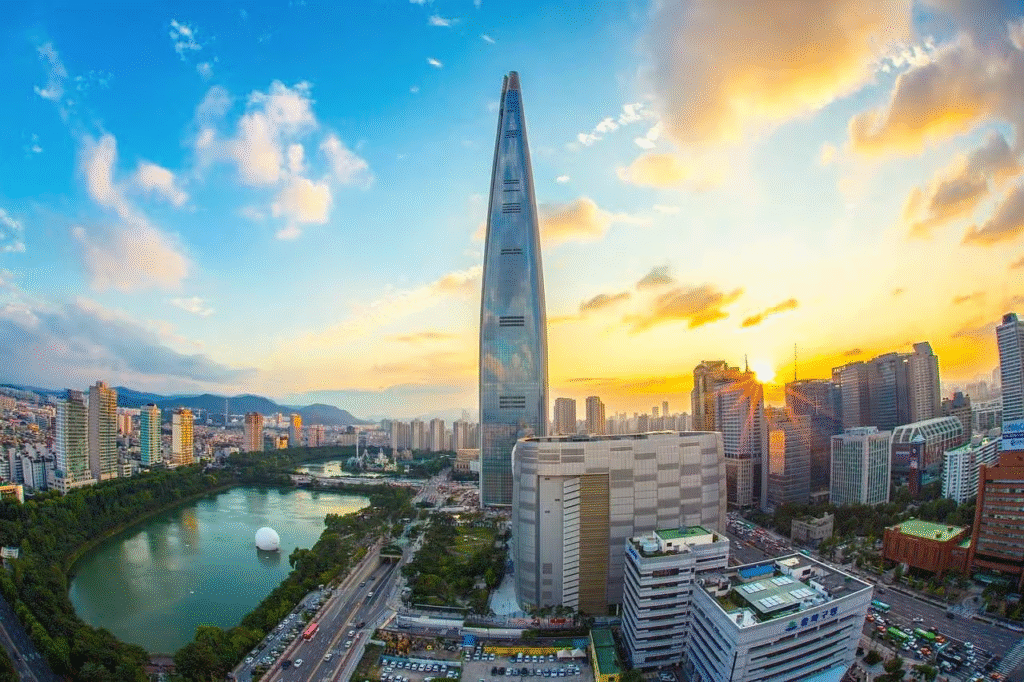
Jamsil doesn’t appear on as many first-timer guides, but it deserves more attention — especially for families or travelers planning longer stays.
Located in southeastern Seoul, the area is calmer, cleaner, and more spacious than many central districts. Lotte World, Seokchon Lake, and large shopping complexes make it particularly convenient for travelers with children.
There’s a more residential feel here. Sidewalks are broader, parks are plentiful, and evenings feel less frantic than places like Hongdae.
Jamsil also becomes especially beautiful during cherry blossom season, when Seokchon Lake transforms into one of Seoul’s prettiest spring spots.
The main drawback is distance. You’re farther from historic attractions and trendy northern neighborhoods, though Seoul’s subway system keeps most places accessible within reasonable time.
So… Where Should You Actually Stay?
If it’s your first time in Seoul and you want maximum convenience, Myeongdong is still the safest overall choice.
If you care more about nightlife, cafés, and youthful energy, Hongdae makes more sense.
If you want traditional atmosphere and slower mornings, choose Insadong or Anguk.
If luxury shopping and modern city life appeal to you, Gangnam works well.
If your dream Seoul itinerary involves aesthetic cafés and creative neighborhoods, Seongsu is probably your place.
And if you’re traveling with kids or prefer calmer surroundings, Jamsil quietly does almost everything well.
The truth is that Seoul isn’t a city you fully understand on a first visit anyway. Most people arrive expecting one version of it and leave fascinated by something entirely different. You might come for K-pop, then fall in love with quiet hanok alleys. You might book a hotel in Myeongdong and unexpectedly spend all your time café hopping in Seongsu.
That unpredictability is part of what makes Seoul memorable. The city reveals itself slowly, neighborhood by neighborhood, subway stop by subway stop — and choosing where to stay is really just choosing which version of Seoul you want to meet first.
Leave a Reply